LIVE Guided Walk Through SALE Ends on August 11 @4:59pm
Don't start this year with classroom systems that make behavior worst, get a calm classroom this year, and start 2026-27 with confidence.
The First 30 Days Classroom Plan is designed to help teachers reduce classroom-management stress by building clear routines, procedures, transitions, and correction systems from the beginning. All in seventy-five minutes.
LIVE Walk Through With The Creator
SALE Ends Soon!
Join The First 30 Days Classroom Plan to get 75% off, Live access, a private group where you get your questions answered daily, and more! And everything is just $37 (Normally $148). Offer Expires Soon.
Let's Face It...
Teachers Are Tired Of Taking Notes, They Want Strategies and Live Walk Throughs
❌
No More
Repeating directions students will learn to master transitions until they become automatic.
❌
Stop
Dealing with constant low-level disruptions during transitions.
❌
We're Over
Having inconsistent and weak systems that make behavior worse over time.
Introducing
The First 30 Days Classroom Plan
✅
Protect Learning Time
Keep instruction moving without constant interruptions.
✅
Calm Responses
Correct behavior calmly without yelling or arguing.
✅
Self-Managing
Classrooms
Establish the systems teachers must have for a calm classroom.
Plus So Much More!
Scroll down to see everything you get access to...
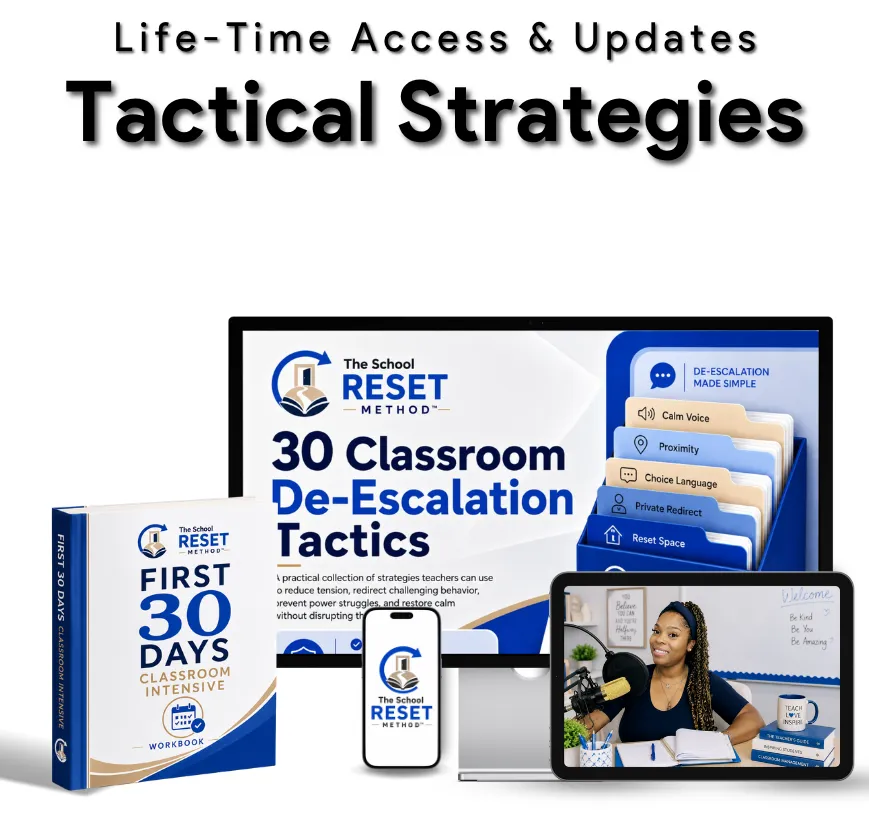
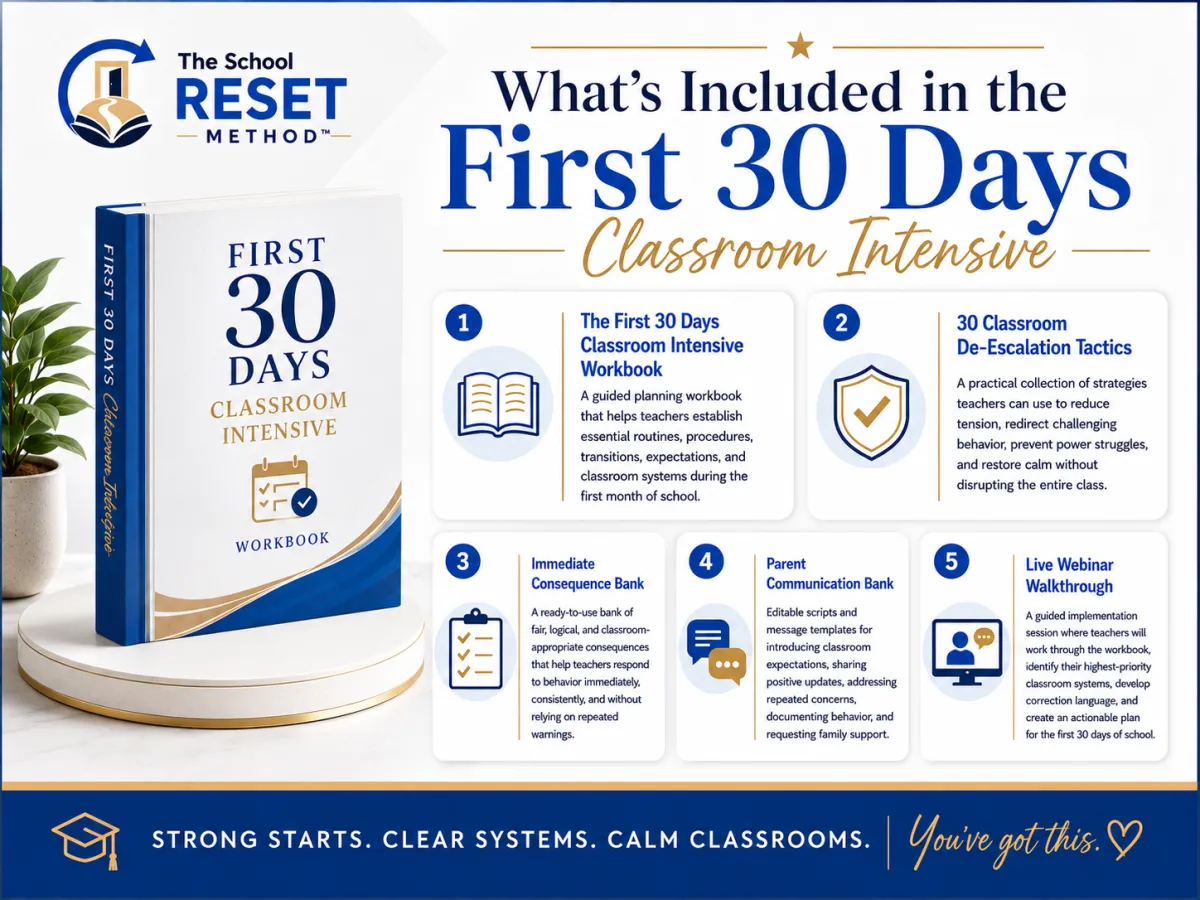
What's Included In "The First 30 Days Classroom Plan "
Meet Your Instructor
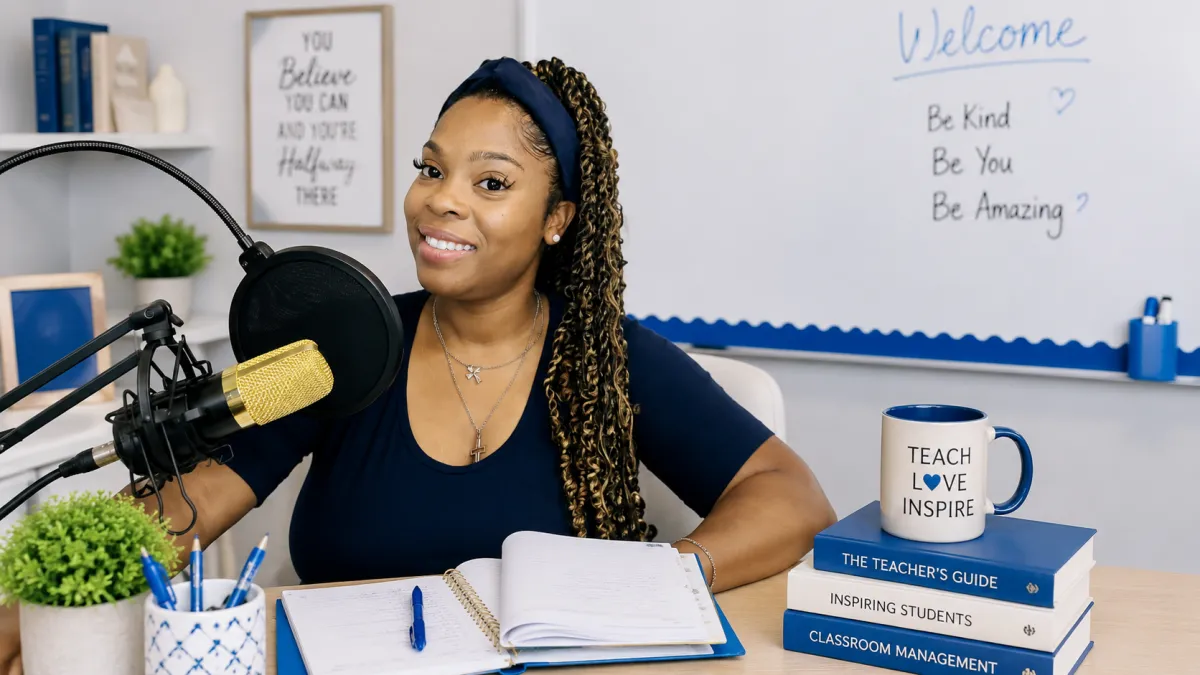
My name is Veronica Shnell, and The School RESET Method™ was built from real classroom experience, not theory.
I began my career as a paraprofessional, working as a floater and as an administrative assistant to the discipline assistant principal. That position allowed me to see student behavior from two different perspectives.
I saw what happened inside classrooms before a referral was written, and I saw what reached the assistant principal’s office after classroom routines, procedures, or expectations had already broken down.
Later, I was placed in several classrooms where I had to learn classroom management quickly. I could not depend on constant office referrals. I had to learn how to respond in the moment, protect instructional time, hold students accountable, and maintain respect between the student, teacher, and administrator.
That experience taught me a critical lesson:
Many classroom problems do not begin with major behavior incidents. They begin with unclear routines, inconsistent procedures, weak transitions, and expectations that were never explicitly taught.
Teachers are often expected to manage a classroom without being shown how to build the systems that make a classroom run smoothly.
We are told to set expectations, but not always shown how to teach them. We are told to be consistent, but not given a practical structure to follow. We are told to manage behavior, but may not have clear language for correcting students without escalating the situation.
That is the gap The School RESET Method™ was created to solve.
The method gives teachers a practical structure for creating a calm, predictable, and productive classroom environment.
The first 30 days of school are especially important because this is when students learn how your classroom operates.
This webinar is not about creating a perfectly organized classroom.
It is about creating a functional classroom system.
It is about helping teachers save time, reduce repeated directions, teach routines clearly, establish procedures, strengthen transitions, and help students understand what is acceptable and what is not.
By the end of the session, teachers will have a clearer system for teaching routines, reinforcing procedures, correcting inconsistency, and creating a classroom environment where both learning and relationships are protected.
Frequently Asked Questions
What skill level is this program for?
New teachers preparing for their first classroom
Early-career teachers who need stronger classroom-management systems
Experienced teachers who want to improve consistency.
Teachers returning after a difficult school year
Educators moving into a new grade level, subject, or school environment
No advanced training is required. The program provides clear, practical steps that teachers can adapt to their own classroom, personality, grade level, and authority style.
How long do I have access to the program & when does it start?
The program begins with the live webinar on:
Tuesday, August 11, 2026
6:30–7:45 p.m. Central Time
Participants receive immediate access to the downloadable workbook and resource banks after registration.
The live webinar replay remains available for seven days after the workshop. The downloadable workbook, de-escalation tactics, consequence bank, and parent communication bank can be saved and used throughout the school year.
Can't I learn all of this on Youtube?
You can find general classroom-management advice on YouTube, but the information is often scattered, repetitive, and disconnected from a complete implementation plan.
This program gives you:
One organized system
Ready-to-use tools
Guided implementation
Clear correction language
Classroom-specific planning templates
A completed first-30-days plan
YouTube can give you more ideas. This program helps you decide what to use, organize it into a working system, and implement it before problems develop.